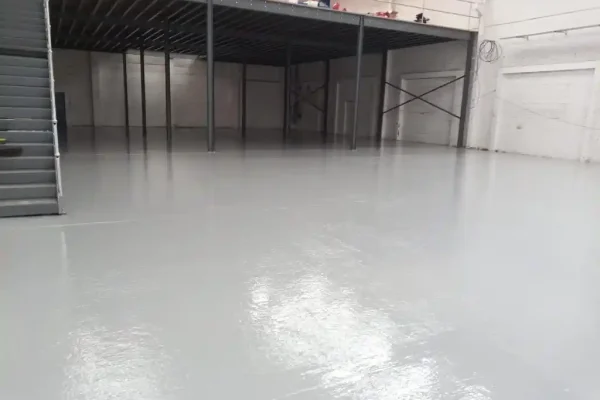
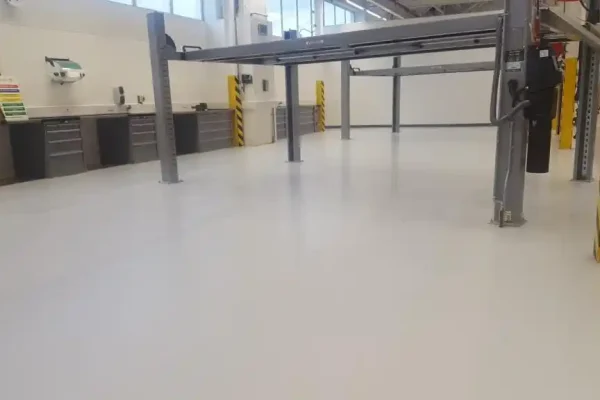
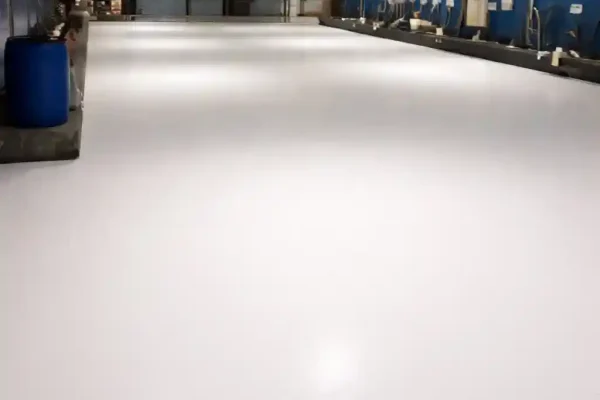
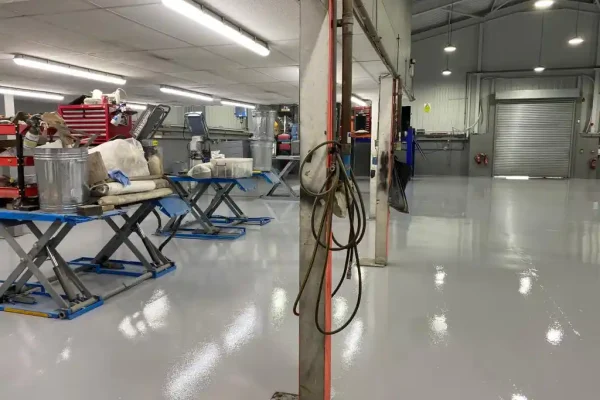
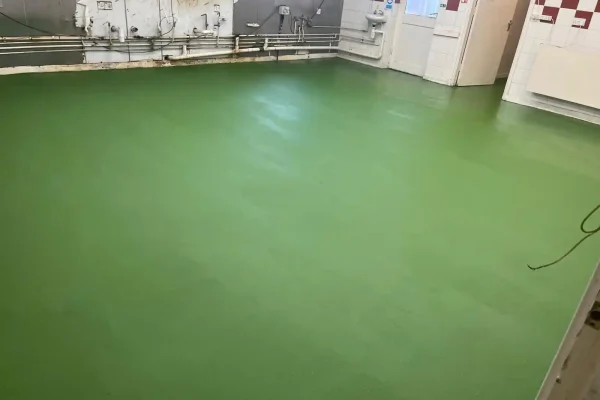
Resin flooring contractors Blackburn manufacturers, food producers and distribution operators rely on for large floors that cannot be taken out of service. Supporting facilities across Whitebirk, Shadsworth, Walker Park, Greenbank and the Furthergate industrial area.
Working for national manufacturers, logistics operators and public sector estates since 1999.
As resin flooring contractors Blackburn operators call on regularly, we work on big floor plates inside old buildings. The town is East Lancashire’s largest industrial centre, on the M65 between Junctions 4 and 6, with the Leeds and Liverpool Canal running through it.
What separates it from its Pennine neighbours is the size of its production floors and the weight of its food sector. Hygiene-driven specification sits alongside heavy-duty industrial specification in the same town, and frequently on the same estate road.
The pattern we find is consistent. A floor that still carries load adequately but has lost its wearing surface, dusts into process, has failing joints on the main forklift runs, and no longer passes a hygiene or safety audit.
One of the largest industrial areas here, with manufacturing, warehousing and trade units.
A modern mixed-use business park supporting manufacturing, distribution and commercial use.
An established industrial estate with engineering and light manufacturing activity.
Industrial and commercial units in the north-east with distribution and production occupiers.
Older industrial and works stock east of the town centre with heavy vehicle access.
Trader units, preparation areas and service routes with frequent wet cleaning.
Dropped component impact, forklift abrasion and dust suppression across large plates.
Joint protection on primary forklift runs with dock-edge and leveller detailing.
Non-porous coved and falled detailing with resistance to caustic cleaning chemicals.
Condensation at door thresholds and systems that install at low temperatures.
Presentable but hard-wearing surfaces that resist grit brought in from the yard.
Weather ingress, standing water and constant directional traffic in a small area.
A food packing hall and a fabrication bay a few hundred metres apart need entirely different answers, and both are routine here. Averaging them produces a floor that is over-specified in one and inadequate in the other.
HACCP thinking becomes coved skirtings, correct falls to drainage and no open joints anywhere.
Where hot water or steam cleaning is used, epoxy crazes at the bond and a polyurethane screed does not.
BS 8204-6 refurbishment restores a wearing surface on concrete that still carries its load perfectly well.
These are active buildings and they rarely come out of service, so phased and out-of-hours working is the assumption from the first conversation rather than a concession offered at the end.
Production areas are taken bay by bay or into planned shutdowns, distribution floors aisle by aisle, and market and retail back-of-house overnight where it has to trade the next morning.
Preparation runs under H-class extraction with areas screened. Sealing dusting concrete addresses the EH40 limit of 0.1 mg per cubic metre over eight hours at source, and our own grinding is controlled to the same standard.
Coved skirtings, falls to drainage and no open joints, with EN 13813 supporting claims.
Polyurethane screeds where hot water or steam cleaning would craze an epoxy coating.
BS 8204-6 with the EH40 limit of 0.1 mg per cubic metre over an eight-hour period.
Pedestrians, pallet trucks and forklifts interact constantly across these estates.
FeRFA classifies resin flooring into eight types by build-up and thickness, and BS 8204-6 governs which one a floor actually needs, with EN 13813 for the screed. Polyaspartic and MMA sit outside that classification because they describe the resin chemistry rather than the build-up. In Blackburn the type changes between the food areas and the production bays.
FeRFA Type 1. Two or more coats up to 150 microns, binding a dusting substrate and giving a cleanable surface. From £8 per square metre.
FeRFA Type 2. Dual component to 300 microns, solvent free, in gloss, matt or silk. Chemical resistance with a decorative finish.
FeRFA Type 3. Up to 1000 microns over prepared concrete and the system specified on most industrial jobs. Takes colour well for demarcation.
FeRFA Type 4. Multi-coat build at 1 to 3mm with aggregate broadcast between coats, for impact and constant wear.
FeRFA Type 5. Flow-applied at 2 to 3mm for a seamless finish where hygiene and cleaning matter more than impact resistance.
FeRFA Type 7. Three part filled system at 4 to 6mm thickness, giving a self-smoothing finish for heavy and very heavy duty areas.
FeRFA Types 7 and 8. Trowel-applied at 6 to 9mm to take thermal shock, steam cleaning and constant heavy forklift traffic.
Cures at temperatures down to −5°C and is ready in around two hours. Installed overnight or at a weekend it can remove the need to shutdown entirely.
Cures in hours, but the odour can taint food, fabrics and stock and the area must be cleared and ventilated. Better suited to new build and refurbishment projects.
Rates run from £8 per square metre for a floor seal to £45 for MMA, inclusive of preparation, labour and materials. Food and washdown screeds sit at the upper end, and are priced separately from the industrial areas around them.
| System | FeRFA | Thickness | Per m² |
|---|---|---|---|
| Floor Seal | Type 1 | Up to 150µm | From £8 |
| Epoxy and PU Coating | Type 2 | 150 – 300µm | £8 – £12 |
| High Build Coating | Type 3 | 300 – 1000µm | £8 – £12 |
| Multi-Layer Flooring | Type 4 | 1 – 3mm | £12 – £16 |
| Self-Smoothing | Type 5 | 2 – 4mm | £20 – £30 |
| Heavy Duty Flowable | Type 7 | 4 – 6mm | £25 – £35 |
| Heavy Duty PU Screed | Type 8 | 6 – 9mm | £30 – £40 |
| Polyaspartic | Chemistry | 300 – 500µm | £38 |
| MMA | Chemistry | 2 – 6mm | £45 |
Inclusive of preparation, labour and materials. Rates assume a sound, accessible substrate and are indicative until the floor has been surveyed. Polyaspartic and MMA sit outside the FeRFA type classification because they describe the resin chemistry rather than the build-up.
A three day shutdown at a plant turning over £2,000 an hour is £120,000 of lost output. On most sites that is several times the price of the floor.
Five contractors quoted one timber processing plant. All five proposed the same system and a three to four day closure. None of them costed the closure.
We proposed a faster-curing system installed across a weekend. A higher rate per square metre, and no shutdown at all. On the client’s own figures the avoided losses exceeded the price of the floor.
We install evenings, weekends and one bay at a time.
Whether a shutdown costs you thousands an hour or simply gets in the way, you do not always have to close your site for a resin flooring installation.
Rebuilding failing joints along the primary forklift runs and at dock leveller edges.
Forming coved skirtings and correct falls to drainage in food and washdown areas.
Damp proof membrane where a substrate fails moisture testing, as a standalone package.
Coved polyurethane systems with falls, handed back cleanable and audit ready.
Impact and abrasion resistant floors laid around fixed plant in planned shutdowns.
Joint repairs and demarcation installed aisle by aisle with racking left loaded.
We work across the town regularly, from Whitebirk and Shadsworth Business Park through to Walker Park, Greenbank, the Furthergate and Philips Road area and the market and retail back-of-house. We are Cheshire based, so a survey usually happens within days and there is no mobilisation charge for attending.

Usually not. The common pattern here is concrete that still carries its load perfectly well but has lost its wearing surface, dusts into process and has failing joints. That is a refurbishment problem rather than a replacement one, and BS 8204-6 covers restoring the surface without breaking anything out.
No. Hot water and steam impose thermal movement that epoxy tolerates poorly, and it crazes at the bond. A polyurethane screed is formulated to absorb that cycling, so the cleaning method decides the chemistry rather than the other way round.
Two problems at once. It contaminates product, and it puts respirable crystalline silica into the working air, limited under EH40 to 0.1 mg per cubic metre over eight hours. Sealing the floor deals with both at source rather than managing the consequences daily.
Yes, but not with one specification. A packing hall needs coving, falls and chemical resistance; a fabrication bay needs impact and abrasion tolerance. We specify and price them separately so you can see what each area actually costs rather than averaging both.
From £8 per square metre for a floor seal up to £45 for MMA, inclusive of preparation, labour and materials. Food and washdown screeds sit at the upper end. The full table by system is on the cost page.
Accrington · Burnley · Chorley · Preston · Leyland · Nelson · Skelmersdale
Tell us what the area produces, how it is cleaned down and when it can be released. We attend, test the substrate, and put a written specification and a fixed price in front of you at no cost.