
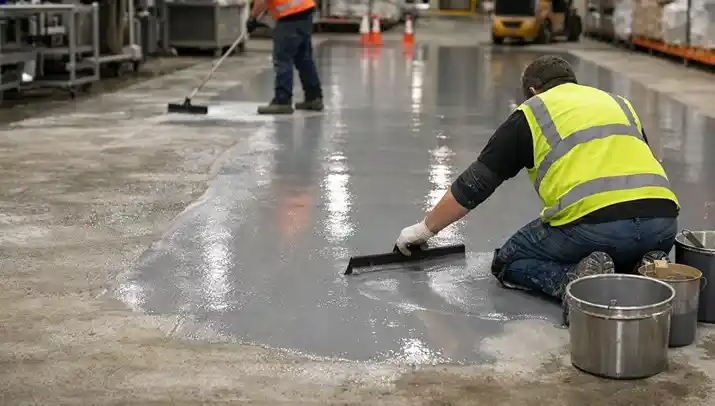
Fast cure resin flooring installed overnight, across a weekend or inside a shutdown window. Polyaspartic systems are ready for traffic in around two hours, so on many sites the floor gets replaced without production stopping at all.
A three day closure at a plant turning over £2,000 an hour is £120,000 of lost output. On most industrial jobs that is several times the price of the floor, and it appears on no quotation you will receive.
A timber processing plant running day and night shifts held five quotes for a new floor. All five proposed the same resin system. All five required a three to four day shutdown. None of them costed the shutdown.
We proposed a faster-curing system installed across a weekend, with teams working eighteen hour days Saturday and Sunday and production resuming Monday morning. Our materials and labour cost more than any of the other five. The total cost to the business was substantially lower, and on the client’s own figures the avoided losses exceeded the entire price of the floor.
| System | Ready for Traffic | Application Temperature | Typically Used For |
|---|---|---|---|
| Polyaspartic | Around 2 hours | Down to −5°C | Overnight and weekend work, cold stores, live sites |
| MMA | A few hours | Low temperature capable | New build and refurbishment only — odour requires the area cleared |
| High Build Epoxy | 24 to 48 hours | 15°C and above | Planned shutdowns and holiday closures |
| PU Screed | 24 to 48 hours | Wide operating range | Shutdown windows where duty matters more than speed |
Cure times are indicative and depend on temperature, humidity and film thickness. The constraint on any installation is cure time rather than application time, which is why the programme is agreed at survey rather than assumed.
In by six, out by six. Suits smaller areas and single bays where the floor can be released after the last shift and needs to take traffic at the start of the next.
Friday evening to Monday morning, with teams working long days across both days. The usual answer for a full production floor on a five day operation.
One aisle, cell or bay at a time, handed back as it cures. Slower overall but the site never stops, which on a seven day operation is the only option.
Into a planned maintenance closure or holiday period, where speed matters less and a heavier duty system can be specified instead.
Fast curing systems cost more per square metre, and they are not the heaviest duty option available. If your site can close for three days without losing meaningful output, a conventional epoxy or a polyurethane screed will usually give you a better floor for less money.
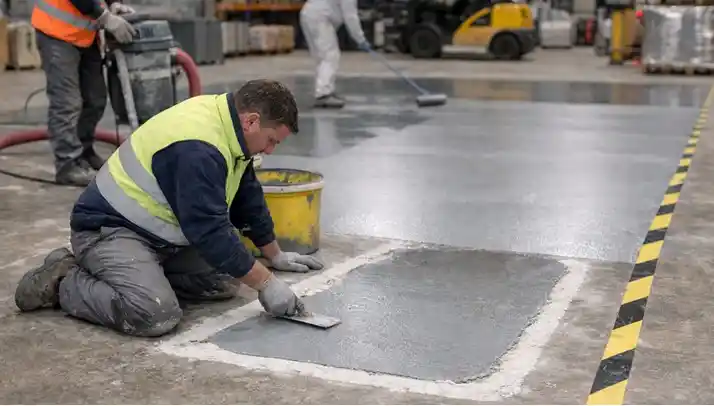
Preparation cannot be rushed either. The substrate still has to be ground back, tested and repaired properly, and that work takes the time it takes whatever goes on top of it. A fast cure shortens the wait after application, not the job as a whole.
Where a floor takes constant counterbalance traffic and thermal shock, a 6 to 9mm polyurethane screed remains the right specification even though it needs a longer window. We will say so rather than sell you the quick answer.
Polyaspartic systems are typically ready for foot traffic in around two hours and full service within a working day, depending on temperature and film thickness. MMA cures in a few hours. Conventional epoxy needs 24 to 48 hours at 15°C or above.
On many sites, yes. Friday evening to Monday morning is a common programme, with teams working long days across both days. Whether the whole area fits depends on the square metres and how much preparation the substrate needs, which is why the programme is agreed at survey.
No, but it does mean different properties. Polyaspartic is hard-wearing and UV stable but is a coating rather than a screed, so where a floor takes constant heavy forklift traffic and thermal shock a thicker polyurethane screed is still the better specification.
Polyaspartic cures at temperatures down to −5°C, which makes installation possible inside operational cold stores without a full defrost. That is one of the few situations where the fast cure system is also the technically correct one.
Per square metre, yes. In total cost, frequently not. The calculator on our cost page puts material cost and lost production side by side, and on sites where an hour of stopped output is worth real money the higher rate is usually the cheaper project.
Yes. Grinding, moisture testing and repairs take the time they take regardless of what goes on top. Fast curing shortens the wait after application, not the whole job, and anyone promising otherwise is planning to skip preparation.
Give us the area, the hours the floor can be released and what an hour of stopped production is worth. We will specify a system that fits the window and quote the programme alongside the floor.