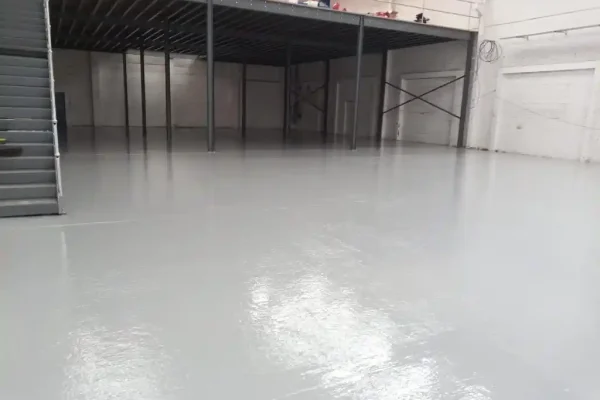
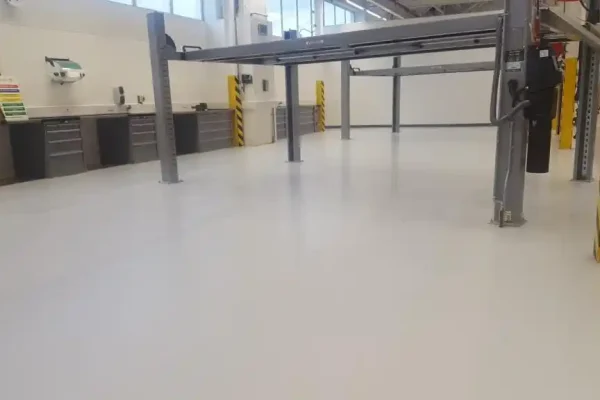
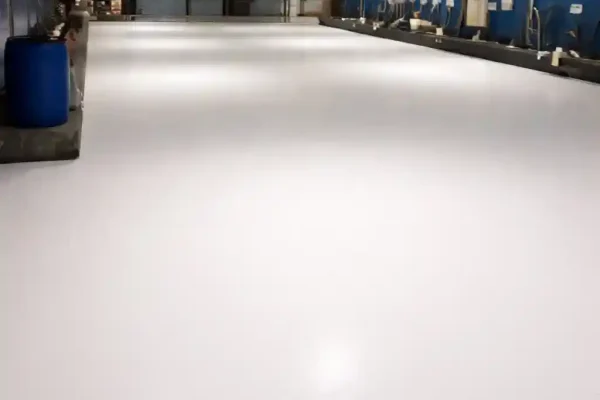
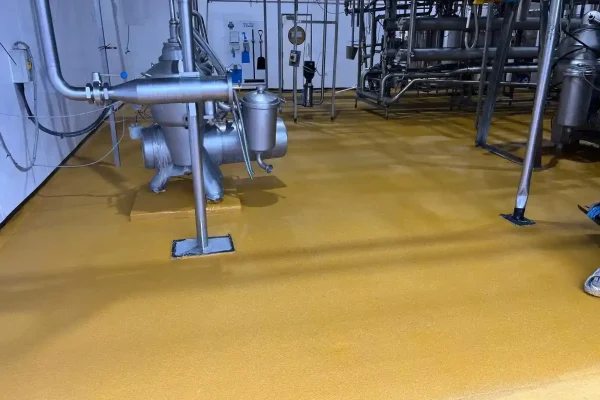
Resin flooring contractors Crewe engineering and rail-linked businesses call on for heavy-duty, chemically resistant floors. Supporting engineering, rail-related and industrial facilities across Crewe Business Park, Basford, Electra Way, Radway Green and the wider Crewe area.
Working for national manufacturers, logistics operators and public sector estates since 1999.
As resin flooring contractors Crewe engineering firms call on regularly, we see a failure pattern specific to the town. Rail built Crewe and rail still shapes how its buildings are used, with the M6 at Junctions 16 and 17 and the West Coast Main Line setting the industrial geography.
Where Warrington moves pallets across large clean spans, Crewe supports machine bases, jacking points, component handling, fabrication and maintenance. Oils, greases, coolants, fuels and solvents are part of daily operation, and the failure follows the use: joint spalling and edge breakdown along trafficked routes, with chemical staining and surface erosion in the workshop bays.
Much of the stock was built for lighter duty than it now carries. That makes refurbishment, not replacement, the realistic proposition on most Crewe floors we survey.
A major employment zone combining engineering, manufacturing and commercial facilities with technical and controlled space.
An established estate supporting storage, manufacturing and distribution, with heavy goods movement across its routes.
Warehousing, logistics and trade units carrying sustained heavy vehicle movement, where dock edges and joints take the wear.
Manufacturing and specialist industrial activity requiring durable flooring, controlled areas and dependable joint detailing.
Long-established industrial and trade units, typical of the refurbishment-led building stock across much of the town.
Trade counters, industrial support and service units with frequent vehicle access and near constant pallet movement.
Compressive strength, impact tolerance and resistance to cutting fluids around machine bases and press lines.
Heavy-duty screeds detailed around pits, jacking points and access routes that carry constant load.
Fuel, oil and brake fluid resistance combined with slip resistance wherever fluids reach the floor.
Abrasion resistance and joint arris protection off Electra Way and Basford under daily forklift traffic.
Chemically tolerant, non-dusting finishes in compressor houses and the service routes that link them.
Dock-edge impact and standing water concentrated into the few metres that every pallet has to cross.
Crewe supports machine bases, jacking points, component handling, fabrication and maintenance, in buildings where oils, greases, coolants and fuels are part of daily operation. Saw-cut and movement joints give way before the field of the floor does.
BS 8204-6 governs the difference between a high-build coating and a screed. Under-specification is the commonest cause of early failure here.
Saw-cut and movement joints break down first. Arrises are rebuilt in structural resin and sealed flexibly rather than simply filled rigid.
Oils, coolants, fuels and solvents are specified against your COSHH register rather than claimed generally, because resistance is never universal.
Refurbishment, not new build, is the dominant opportunity in Crewe. Much of the industrial stock carries substrates laid decades ago that were never specified for the traffic they now take, and the concrete underneath is usually still sound enough to save.
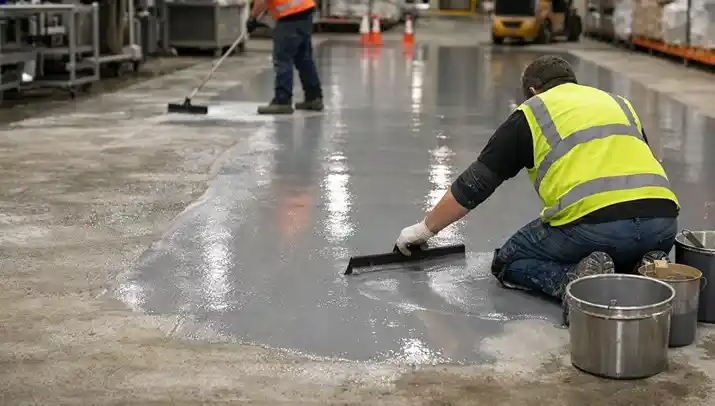
That work happens in occupied buildings, which makes dust the constraint. Grinding concrete releases respirable crystalline silica, limited under EH40 to 0.1 mg per cubic metre over an eight-hour period, so every machine runs coupled to H-class extraction and shared areas are screened.
The floor is then taken bay by bay, or into shift changeovers and shutdown windows, so machine bases and access routes are handed back as they cure rather than the plant stopping.
The standard governing synthetic resin floors, separating a coating from a multi-layer, a flowable or a screed build-up.
Walkway definition and exclusion zones around moving plant are safety controls under the 1992 Workplace Regulations.
Respirable crystalline silica is limited to 0.1 mg per cubic metre over eight hours, making extracted preparation a duty.
Electrical resistance testing supports ESD specification in test, assembly and control equipment areas across the town.
FeRFA classifies resin flooring into eight types by build-up and thickness, and BS 8204-6 governs which one a floor actually needs. Polyaspartic and MMA sit outside that classification because they describe the resin chemistry rather than the build-up. On Crewe sites the distinction between a coating and a screed is usually where a specification succeeds or fails.
FeRFA Type 1. Two or more coats up to 150 microns, binding a dusting substrate and giving a cleanable surface. From £8 per square metre.
FeRFA Type 2. Dual component to 300 microns, solvent free, in gloss, matt or silk. Chemical resistance with a decorative finish.
FeRFA Type 3. Up to 1000 microns over prepared concrete and the system specified on most industrial jobs. Takes colour well for demarcation.
FeRFA Type 4. Multi-coat build at 1 to 3mm with aggregate broadcast between coats, for impact and constant wear.
FeRFA Type 5. Flow-applied at 2 to 3mm for a seamless finish where hygiene and cleaning matter more than impact resistance.
FeRFA Type 7. Three part filled system at 4 to 6mm thickness, giving a self-smoothing finish for heavy and very heavy duty areas.
FeRFA Types 7 and 8. Trowel-applied at 6 to 9mm to take thermal shock, steam cleaning and constant heavy forklift traffic.
Cures at temperatures down to −5°C and is ready in around two hours. Installed overnight or at a weekend it can remove the need to shutdown entirely.
Cures in hours, but the odour can taint food, fabrics and stock and the area must be cleared and ventilated. Better suited to new build and refurbishment projects.
Rates run from £8 per square metre for a floor seal to £45 for MMA, inclusive of preparation, labour and materials. On an engineering site the second number matters more: stopped production usually costs more than the floor.
| System | FeRFA | Thickness | Per m² |
|---|---|---|---|
| Floor Seal | Type 1 | Up to 150µm | From £8 |
| Epoxy and PU Coating | Type 2 | 150 – 300µm | £8 – £12 |
| High Build Coating | Type 3 | 300 – 1000µm | £8 – £12 |
| Multi-Layer Flooring | Type 4 | 1 – 3mm | £12 – £16 |
| Self-Smoothing | Type 5 | 2 – 4mm | £20 – £30 |
| Heavy Duty Flowable | Type 7 | 4 – 6mm | £25 – £35 |
| Heavy Duty PU Screed | Type 8 | 6 – 9mm | £30 – £40 |
| Polyaspartic | Chemistry | 300 – 500µm | £38 |
| MMA | Chemistry | 2 – 6mm | £45 |
Inclusive of preparation, labour and materials. Rates assume a sound, accessible substrate and are indicative until the floor has been surveyed. Polyaspartic and MMA sit outside the FeRFA type classification because they describe the resin chemistry rather than the build-up.
A three day shutdown at a plant turning over £2,000 an hour is £120,000 of lost output. On most sites that is several times the price of the floor.
Five contractors quoted one timber processing plant. All five proposed the same system and a three to four day closure. None of them costed the closure.
We proposed a faster-curing system installed across a weekend. A higher rate per square metre, and no shutdown at all. On the client’s own figures the avoided losses exceeded the price of the floor.
We install evenings, weekends and one bay at a time.
Whether a shutdown costs you thousands an hour or simply gets in the way, you do not always have to close your site for a resin flooring installation.
Crack stitching, arris rebuilding and flexible joint sealing on the older Basford and Crewe Gates substrates.
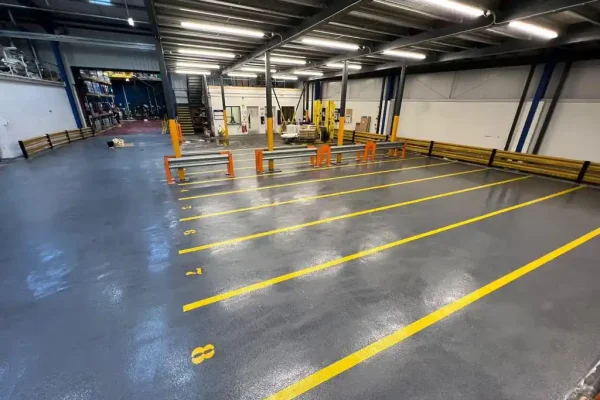
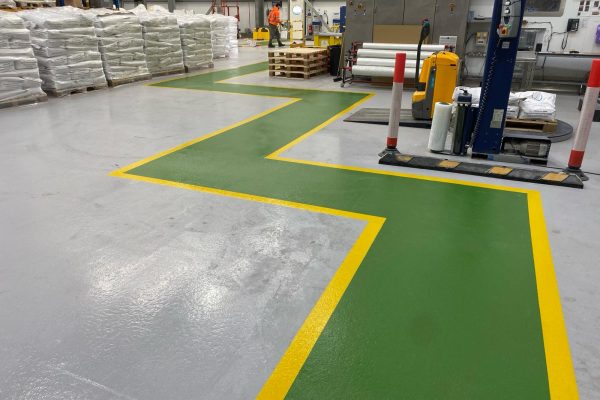
Traffic routes, walkways and exclusion zones around moving plant, applied in resin rather than in tape.
Surface damp proof membrane where a substrates fails moisture testing, supplied as a standalone package.
Heavy-duty build-ups phased bay by bay around machine bases so that production continues throughout.
Screeds detailed around pits and jacking points, with demarcation applied as part of the build-up.
Abrasion resistant floors and joint repairs across logistics units, sequenced into shutdown windows.
We work across the town regularly, from Crewe Business Park and Basford East through to Electra Way, Radway Green and the Crewe Gates units. We are Cheshire based rather than Crewe based, which means a survey usually happens within days and there is no mobilisation charge for attending.
Because the arris, the edge of the joint, takes the whole impact of every wheel that crosses it. Once it chips the damage widens and the surrounding slab follows. Filling a movement joint rigidly makes it worse, because blocking the movement transfers stress into the concrete either side. Arrises are rebuilt in structural resin and sealed with a flexible polysulphide.

If it is specified for it. BS 8204-6 separates a high-build coating from a multi-layer, a heavy-duty flowable and a polyurethane screed, and the difference matters under point loading from machine bases and jacking points. Under-specification is the commonest reason an industrial floor in Crewe fails early.
Chemical resistance is a property of the individual system rather than of resin flooring generally, so we ask for your COSHH register at survey and specify against what is actually on the floor. Any contractor claiming universal resistance has not read the datasheet.
Usually. Work is phased bay by bay, or programmed into shift changeovers, weekends and shutdown windows. Preparation runs under H-class dust extraction with shared areas screened, which is what makes working in an occupied engineering building practical.
From £8 per square metre for a floor seal up to £45 for MMA, inclusive of preparation, labour and materials. Heavy-duty engineering specifications sit at the upper end. The full table by system is on the cost page, with a calculator that adds the cost of stopped production.
Nantwich · Sandbach · Middlewich · Winsford · Northwich · Chester · Macclesfield
Tell us where the floor is, what runs across it and when the area can be released. We attend, test the substrate, and put a written specification and a fixed price in front of you at no cost.