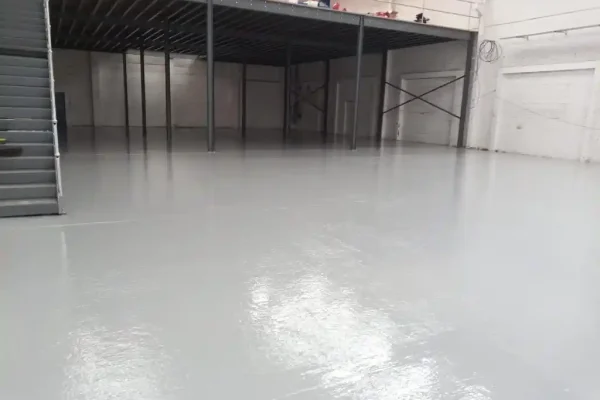
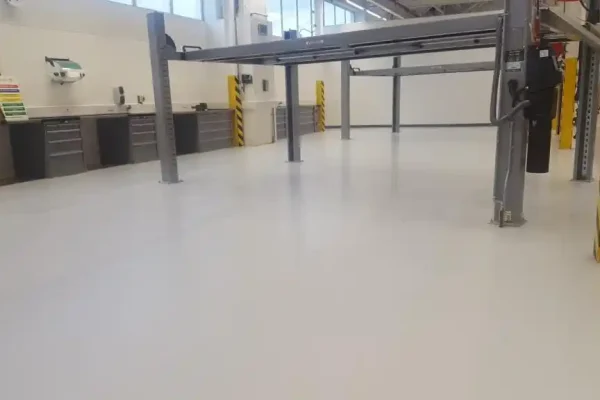
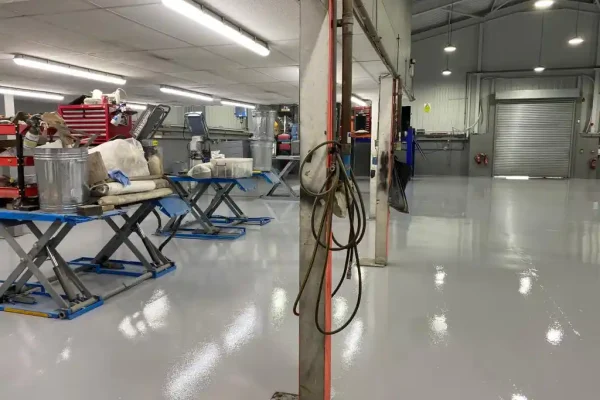
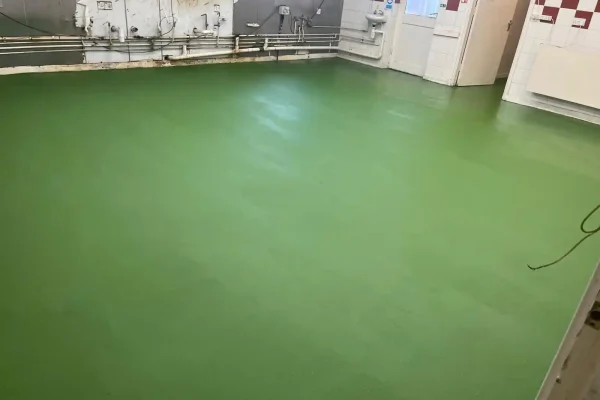
Resin flooring contractors Fleetwood processors, cold store operators and port support businesses rely on for floors that take hot washdown on a cold room. Supporting processing and storage facilities across Copse Road, Red Marsh at Thornton and the Wyre dock estate.
Working for national manufacturers, logistics operators and public sector estates since 1999.
As resin flooring contractors Fleetwood operators call on regularly, we specify for a combination that is rare elsewhere in the county. The town stands at the mouth of the Wyre, reached by the A585 from Junction 3 of the M55, and its fishing and fish-processing tradition still shapes the estates around the dock.
Those floors face constant water, protein and salt contamination, low temperatures, and cleaning regimes using hot water, steam and aggressive chemicals in the same shift.
That combination destroys coatings quickly. It is the reason polyurethane screeds lead here rather than epoxy systems, and it is the honest starting point for any conversation about a Fleetwood floor.
The principal industrial area, with processing, storage and light industrial units.
Industrial and trade units inland, with vehicle movement and processing activity.
Port-side processing, cold storage, marine support and quayside operations.
A large established process and industrial site inland along the Wyre estuary.
Roadside industrial, storage and distribution premises linking the port to the M55.
Food handling, preparation and service areas with frequent wet cleaning down.
Protein and fish oil, constant water, ice underfoot and hot caustic cleaning.
Falls to drainage, coved junctions and grip retained when wet and greasy.
Low-temperature installation with condensation and ice managed at thresholds.
Thermal cycling from hot cleaning against cold ambient, the classic shock case.
Wet, cold, high-traffic areas where slip risk and abrasion combine daily.
Salt, fuel, hydraulic oil and dropped components with tracked plant movement.
The differential between a chilled room and a hot caustic clean is what destroys a Fleetwood floor. An epoxy coating crazes, debonds and fails at the joints under that cycling. A heavy-duty polyurethane screed is formulated to absorb it, and that is the whole argument.
BS 8204-6 and FeRFA Types 5 to 8 frame the polyurethane screeds that tolerate this differential.
A slip value achieved in water does not describe performance under fish oil and slurry.
Coved skirtings, sealed junctions and falls stop residues harbouring where cleaning cannot reach.
A cold store cannot simply be handed over. The chamber has to be emptied, warmed, worked in and returned to temperature, so that whole cycle is planned at survey rather than discovered during the job.
Systems are selected to cure at the temperature available, and we set out realistic return-to-service windows rather than promising timescales the conditions will not support. Processing halls are taken between shifts or into planned shutdowns.
Where polyurethane screeds are specified, which in Fleetwood is most of the time, ISOPA and ALIPA diisocyanate training records apply and every operative handling them holds current REACH certification.
BS 8204-6 with FeRFA Types 5 to 8, because coatings craze and debond under this cycling.
Coved skirtings, falls to channels and sealed junctions to walls and plant plinths.
BS 7976 pendulum testing against the real contaminant rather than a water-tested figure.
EN 1504-2 protection with bunding at 110% of capacity where process chemicals are handled.
FeRFA classifies resin flooring into eight types by build-up and thickness, and BS 8204-6 governs which one a floor actually needs, with EN 13813 for the screed and EN 1504-2 where the concrete is being protected. Polyaspartic and MMA sit outside that classification because they describe the resin chemistry rather than the build-up. In Fleetwood the heavy-duty polyurethane screeds lead almost everywhere.
FeRFA Type 1. Two or more coats up to 150 microns, binding a dusting substrate and giving a cleanable surface. From £8 per square metre.
FeRFA Type 2. Dual component to 300 microns, solvent free, in gloss, matt or silk. Chemical resistance with a decorative finish.
FeRFA Type 3. Up to 1000 microns over prepared concrete and the system specified on most industrial jobs. Takes colour well for demarcation.
FeRFA Type 4. Multi-coat build at 1 to 3mm with aggregate broadcast between coats, for impact and constant wear.
FeRFA Type 5. Flow-applied at 2 to 3mm for a seamless finish where hygiene and cleaning matter more than impact resistance.
FeRFA Type 7. Three part filled system at 4 to 6mm thickness, giving a self-smoothing finish for heavy and very heavy duty areas.
FeRFA Types 7 and 8. Trowel-applied at 6 to 9mm to take thermal shock, steam cleaning and constant heavy forklift traffic.
Cures at temperatures down to −5°C and is ready in around two hours. Installed overnight or at a weekend it can remove the need to shutdown entirely.
Cures in hours, but the odour can taint food, fabrics and stock and the area must be cleared and ventilated. Better suited to new build and refurbishment projects.
Rates run from £8 per square metre for a floor seal to £45 for MMA, inclusive of preparation, labour and materials. Processing and cold store screeds sit at the upper end, because thermal tolerance and thickness are what is being paid for.
| System | FeRFA | Thickness | Per m² |
|---|---|---|---|
| Floor Seal | Type 1 | Up to 150µm | From £8 |
| Epoxy and PU Coating | Type 2 | 150 – 300µm | £8 – £12 |
| High Build Coating | Type 3 | 300 – 1000µm | £8 – £12 |
| Multi-Layer Flooring | Type 4 | 1 – 3mm | £12 – £16 |
| Self-Smoothing | Type 5 | 2 – 4mm | £20 – £30 |
| Heavy Duty Flowable | Type 7 | 4 – 6mm | £25 – £35 |
| Heavy Duty PU Screed | Type 8 | 6 – 9mm | £30 – £40 |
| Polyaspartic | Chemistry | 300 – 500µm | £38 |
| MMA | Chemistry | 2 – 6mm | £45 |
Inclusive of preparation, labour and materials. Rates assume a sound, accessible substrate and are indicative until the floor has been surveyed. Polyaspartic and MMA sit outside the FeRFA type classification because they describe the resin chemistry rather than the build-up.
A three day shutdown at a plant turning over £2,000 an hour is £120,000 of lost output. On most sites that is several times the price of the floor.
Five contractors quoted one timber processing plant. All five proposed the same system and a three to four day closure. None of them costed the closure.
We proposed a faster-curing system installed across a weekend. A higher rate per square metre, and no shutdown at all. On the client’s own figures the avoided losses exceeded the price of the floor.
We install evenings, weekends and one bay at a time.
Whether a shutdown costs you thousands an hour or simply gets in the way, you do not always have to close your site for a resin flooring installation.
Forming falls and channel detail so processing and washdown areas drain properly.
Coved skirtings and sealed junctions at walls, plinths and door thresholds.
Damp proof membrane where a substrate fails moisture testing, as its own package.
Polyurethane screeds with coving and falls, handed back cleanable and audit ready.
Systems cured at the temperature available, planned around the re-chill cycle.
Salt and fuel resistant floors where heavy plant and quayside traffic run.
We work across the Wyre regularly, from Copse Road and the dock estate through to Red Marsh and Hillhouse at Thornton and the A585 corridor towards Junction 3 of the M55. We are Cheshire based, so a survey usually happens within days and there is no mobilisation charge for attending.
Because of the temperature differential. A chilled room cleaned with hot water or steam puts the floor through a severe cycle every shift, and epoxy crazes, debonds and lets go at the joints under it. Heavy-duty polyurethane screeds are formulated to absorb that movement, which is why they lead here.
Because it was almost certainly tested in water. Fish oil and slurry behave nothing like water underfoot, so a value achieved wet does not describe how the floor performs in a working processing hall. BS 7976 pendulum testing against the actual contaminant is what should anchor the specification.
The chamber itself has to come out of service, but the site does not. Emptying, warming, working and re-chilling is a planned cycle we set out at survey, with systems selected to cure at the temperature available. We give a realistic return-to-service window rather than a promised date the conditions will not support.

Detailing rather than product. Coved skirtings, sealed junctions to walls and plant plinths and correct falls to drainage are what stop protein residues harbouring where cleaning cannot reach. It is the part of the job an auditor looks at first.
From £8 per square metre for a floor seal up to £45 for MMA, inclusive of preparation, labour and materials. Processing and cold store screeds sit at the upper end, with falls and coving priced separately. The full table by system is on the cost page.
Tell us how cold the area runs, what it is cleaned with and when the chamber can come out. We attend, test the substrate, and put a written specification and a fixed price in front of you at no cost.