Commercial resin flooring for premises where the floor is seen as well as used. Seamless, hard-wearing finishes for showrooms, commercial kitchens, schools, clinics and retail space across the North West, Yorkshire, the Midlands and North East Wales, installed outside trading hours so you do not lose a day.
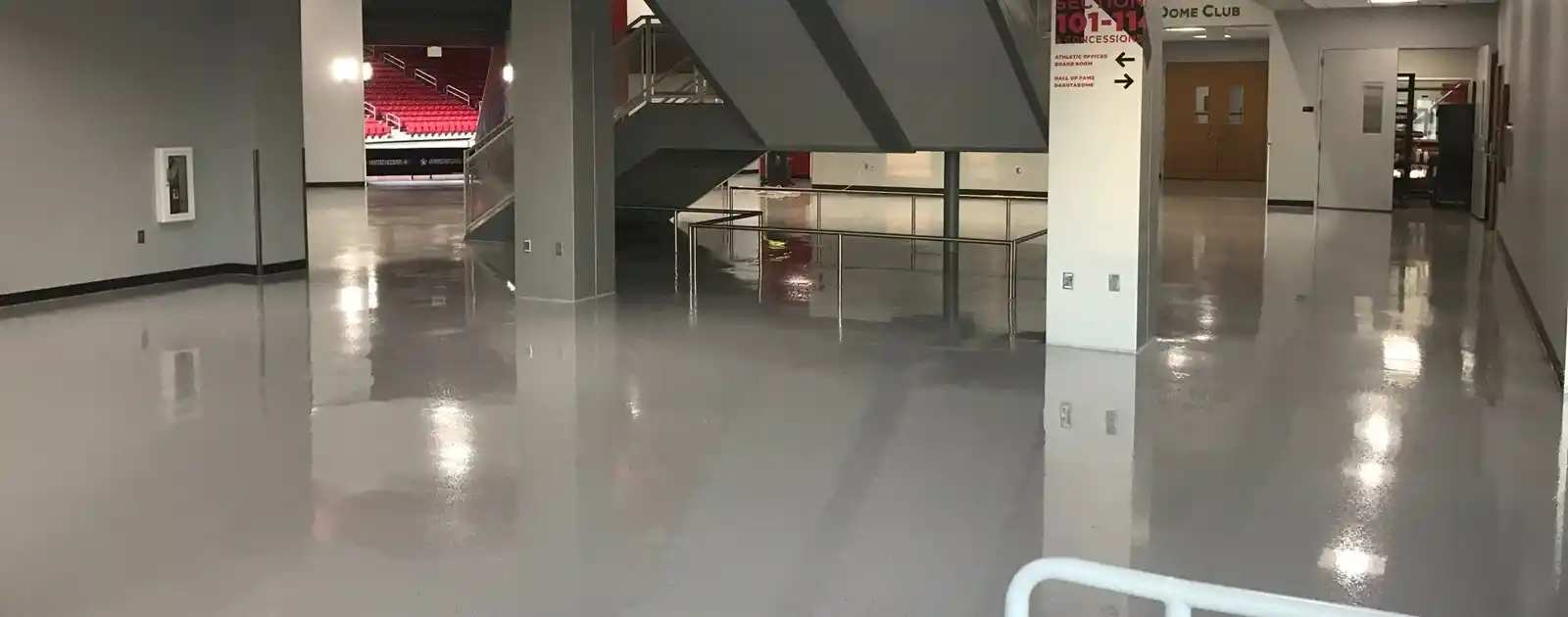
An industrial floor is judged on how long it survives. A commercial floor is judged on that and on how it looks to a customer, an inspector or a parent walking through reception.
That changes the specification rather than the standards. Build-ups are usually lighter because the traffic is foot and trolley rather than counterbalance forklift, but the finish has to be even in colour, consistent in sheen, and free of the roller marks and trowel lines that nobody notices on a factory floor.
Where a commercial space also has an industrial problem behind the scenes, a kitchen, a plant room or a goods lift lobby, the two get specified separately and detailed to meet cleanly at the threshold.
Seamless floors for shop units and back of house, laid to take trolley wheels and constant footfall without scuffing into lanes along the till runs.
High gloss finishes that hold their reflection under display lighting, resistant to tyre marking, oil drips and the point loading of a vehicle turntable.
Non-porous, slip-resistant surfaces with coved skirtings and drainage falls, specified to survive hot oil, washdown and environmental health inspection.
Hard-wearing floors for corridors, dining halls and technology rooms, installed in holiday shutdowns and low in VOC so rooms return to use quickly.
Seamless surfaces with sealed junctions that can be cleaned and disinfected properly, with no joints or grout lines for contamination to sit in.
Decorative flake and quartz finishes where an exposed floor is part of the design, hard enough for chair castors and simple to maintain.
Bar cellars, back of house, changing rooms and pool surrounds, where wet slip resistance matters far more than the customer ever realises.
Impervious floors for kennels, treatment rooms and wash-down areas, detailed to drain properly and stand up to repeated disinfection.
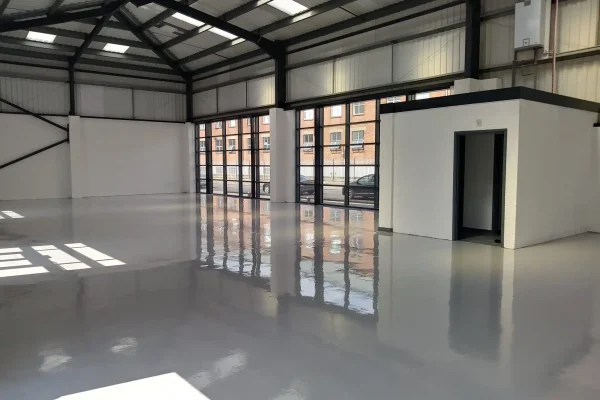
A single even colour in gloss or satin. The most economical finish and the easiest to touch in later if a section is damaged.
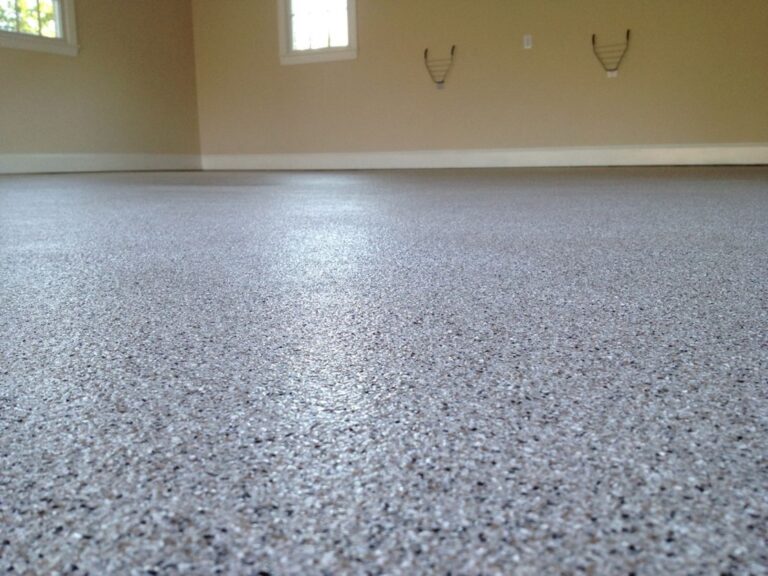
Coloured flakes broadcast into the basecoat and sealed. Hides scuffs and minor imperfections, which suits busy public areas.
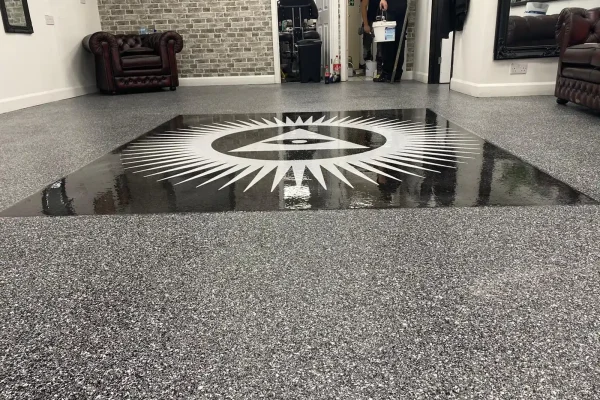
Coloured quartz sealed into resin for a naturally textured surface with grip built in rather than added as a topcoat.
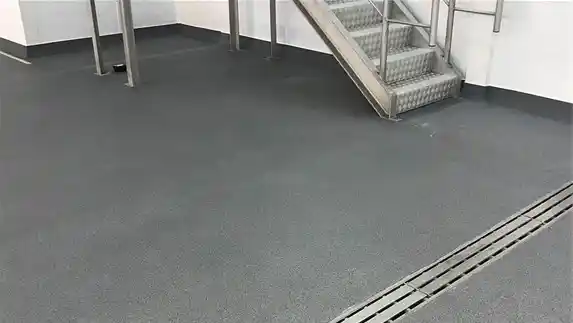
Aggregate added only where the risk is, so entrances and wet areas grip while the rest of the floor stays easy to clean.
A closed shop, an empty restaurant or a school with pupils in it are all the same problem: the floor has to be finished before the doors open. Commercial work is programmed around that rather than around our week.
Most commercial installations run outside trading hours. Fast-curing systems can be walked on the same day, so an area closed on Friday evening reopens Monday.
Schools, colleges and seasonal venues are booked into half terms and closure weeks, with the programme agreed at survey rather than assumed on the quote.
Where closing entirely is not an option, work is phased area by area behind hoarding so the rest of the premises keeps trading throughout.
From £8 per square metre for a floor seal up to £40 for a heavy duty screed, inclusive of preparation, labour and materials. Most commercial work sits in the middle of that range because the traffic is foot and trolley rather than forklift. The full table by FeRFA type is on the cost page.
Usually, yes. Commercial resin flooring is normally installed overnight, at weekends or in holiday closures, and where the premises cannot close at all the work is phased zone by zone behind hoarding. The constraint is cure time rather than application time.
Only if it is specified that way. Slip resistance is designed in using aggregate broadcast into the surface, and it can be applied selectively so entrances, kitchens and wet areas grip while open retail space stays smooth and easy to clean.
Yes, and it is one of the strongest applications for it. A seamless resin floor with coved skirtings and falls to drainage has no joints or grout lines for grease and bacteria to sit in, which is exactly what an environmental health officer looks for.
Fifteen to twenty years with maintenance in most commercial settings. Service life is decided by the condition of the substrate, the quality of preparation and whether the system was matched to the traffic, not by the brand of resin used.
In most cases yes, within the range the system allows. Exact brand matching depends on the resin chemistry, so we confirm what is achievable at survey rather than promising a reference on the quotation and adjusting later.
Tell us the area, what happens on it and when the premises can be released. We survey the substrate, specify against the use, and quote the floor and the programme together.